
Recommended: Best knife sharpening method — precision vs whetstones
A straightforward approach you can use today
The Fox Mini-KA Karambit is a unique knife that stands out for its compact size and curved blade design. While karambits have traditionally been associated with tactical use, the Mini-KA reinterprets this style for everyday tasks, combining precision cutting with ergonomic handling. Before deciding if this knife is right for your collection or daily carry, it’s important to understand what makes it special, how it performs, and where it fits compared to other blade types.
The Mini-KA’s compact form factor and distinctive curved blade make it highly maneuverable for intricate cutting jobs. Its design is inspired by traditional karambit knives but scaled down for better portability and ease of use. This makes it especially appealing for those who value a knife that can handle detailed work without the bulk of a larger blade. Understanding the blade’s shape and steel quality will also help you appreciate its performance and maintenance requirements. For a broader perspective on blade shapes and their specific advantages, you might want to explore our detailed guide on why blade shape matters more than brand.

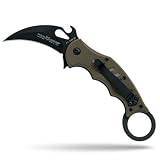


Last update on 2026-09-28 / Affiliate links / Images from Amazon Product Advertising API
What This Type of Knife Is Good For
The Fox Mini-KA Karambit excels at precise cutting tasks that benefit from a curved edge. Its design is ideal for slicing, carving, and controlled cuts where leverage and blade angle are critical. Unlike straight blades, the karambit’s inward curve allows for natural pulling motions, making it effective for detailed outdoor tasks, utility work, and certain culinary applications like trimming or peeling. It’s less suited for chopping or heavy-duty cutting due to its smaller blade size and specialized geometry. If you’re interested in understanding different knife types and their practical applications, check out our comprehensive overview on types of knives and their uses.
Key Features to Look For
- 🔪 Blade curvature: Look for a smooth, consistent curve that enhances control and slicing efficiency.
- 🛠️ Locking mechanism: A reliable lock such as a liner or frame lock for safe handling and secure blade deployment.
- 🌿 Handle grip: Ergonomic shape with textured or contoured surfaces for slip resistance.
- ⚖️ Weight and balance: A lightweight design balanced around the pivot for fluid manipulation.
- 🔗 Materials: High-quality steel for edge retention and corrosion resistance, combined with durable handle materials like G10 or aluminum.
- 👁️ Finger ring: A well-sized and smooth finger ring that supports stability without discomfort.
Blade and Steel Notes
The Fox Mini-KA typically features stainless steel known for a good balance of hardness and corrosion resistance, such as 440C or similar alloys. The steel is often heat-treated to a medium-high hardness (around HRC 58-60), which allows for sharp edges that hold up well under everyday cutting tasks without being too brittle. The edge geometry is usually a hollow grind or convex grind, optimized for slicing rather than heavy chopping. This geometry helps maintain a keen edge that can be easily sharpened with standard sharpening systems but may require attention to maintain the smooth curve. The curved blade shape distributes cutting force efficiently but limits the utility of certain edge profiles like tanto or drop point, which are better suited for piercing or more aggressive cutting.
Ergonomics and Carry/Handling
One of the Mini-KA’s strongest points is its ergonomics. The handle design fits comfortably in the hand, with the finger ring allowing for a secure grip even during detailed work. This reduces fatigue and improves precision. The knife’s small size makes it easy to carry discreetly, often clipped inside a pocket or attached to a keychain. The light weight and balance ensure that handling feels natural, with the curved blade providing excellent control during slicing motions. However, the karambit style does require some initial practice for users accustomed to straight blades to fully appreciate the handling nuances.
Real-World Use Cases
The Mini-KA is well-suited for tasks such as opening packages, cutting rope or cords, and performing fine outdoor tasks like whittling or trimming foliage. In culinary contexts, it shines when used for peeling, scoring, or precision slicing of fruits and small vegetables where control is essential. Its design facilitates pulling cuts that are difficult with straight knives. However, it is not recommended for tasks requiring chopping or prying, where a sturdier blade geometry would be preferable. For everyday carry enthusiasts, it offers a versatile secondary blade that complements larger knives.
Pros
- Compact and lightweight for easy carry
- Ergonomic finger ring ensures secure grip and control
- Curved blade excels at precision slicing and pulling cuts
- Durable materials provide good edge retention and corrosion resistance
- Unique design appeals to collectors and users seeking specialized utility
Cons
- Limited utility for chopping or heavy-duty tasks
- Steeper learning curve for users unfamiliar with karambit handling
- Curved edge may be challenging to sharpen without proper tools
- Smaller blade limits reach and leverage compared to straight blades
- Not ideal as a primary kitchen or utility knife
Who It’s Best For
The Fox Mini-KA Karambit is best suited for knife enthusiasts, EDC (everyday carry) users, and those who require a precision cutting tool for specialized tasks. It appeals to people who appreciate unique blade designs and want a lightweight, ergonomic knife that offers a different cutting dynamic than traditional straight blades. If you frequently engage in activities that benefit from controlled slicing or detailed cutting work, this knife is a practical choice. However, those needing a robust all-purpose or kitchen knife should consider complementing it with more conventional blade styles.
What to Watch Out For
Pay close attention to the locking mechanism to ensure it feels secure and reliable, as a loose lock can be a safety hazard. The finger ring size should comfortably fit your preferred grip style without causing discomfort during extended use. Also, be mindful of blade steel and finish—some versions may have coatings or finishes that affect corrosion resistance or ease of sharpening. Because of the blade’s curvature, sharpening requires specific techniques or tools, so be prepared to invest time or equipment to maintain the edge properly.
Maintenance Tips
Maintain the Mini-KA by regularly cleaning the pivot and locking mechanism to prevent debris buildup. Use a fine oil to lubricate the pivot for smooth deployment. Sharpen the curved blade using a flexible sharpening rod or ceramic hone to follow the edge’s contour without damaging the geometry. Avoid heavy prying or twisting motions that could stress the blade or lock. Periodically check the handle and ring for wear or looseness, tightening screws as necessary. Proper storage in a dry environment will help prevent rust and corrosion, especially if you live in humid conditions.
Final Thoughts
The Fox Mini-KA Karambit is a thoughtfully designed tool that stands out in the realm of compact, curved knives. Its ergonomic handle, secure finger ring, and efficient blade geometry make it a valuable addition for those who need precision cutting in a small package. While it is not a universal tool and requires some familiarity to use effectively, it offers a distinct cutting experience that complements more traditional knives. If you value specialized function paired with comfortable handling, the Mini-KA is worth considering. For a deeper understanding of how blade shapes influence function, be sure to visit our article on why blade shape matters more than brand.
Further Reading on Sagaknives
- How often you should sharpen a Japanese knife
- Knife collecting basics
- Types of knives and their uses
Last Updated on May 31, 2026