
How to get better results without overcomplicating things
Choosing the right sharpening method for your knives is essential to maintain their performance and longevity. When it comes to kitchen blades, two popular sharpening options are pull-through sharpeners and sharpening stones. Understanding the differences between these tools, their advantages, and the situations in which each excels can save you time, effort, and preserve the quality of your knives. Whether you’re maintaining everyday chef’s knives or specialized blades such as those discussed in this detailed guide, knowing which sharpening method to use is key.
Pull-through sharpeners offer convenience and speed, often appealing to those new to knife maintenance. Sharpening stones, on the other hand, provide precision and control but require more skill and patience. Deciding between these methods depends on your knife types, sharpening frequency, and desired sharpness level. Additionally, blade geometry plays an important role in choosing a technique, as explained in why blade shape matters more than brand. This guide will help you make an informed choice and sharpen your knives effectively.
![Longzon 5-in-1 Knife Sharpener [4 Stage] with a Pair of Cut-Resistant Glove,Original Premium Polish Blades, Best Kitchen Knife Sharpener Works for Fruit and Steel Knives, Scissors(Black+Silver)](https://m.media-amazon.com/images/I/41lTXtw0w-L._SL160_.jpg)
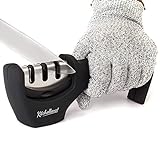



Last update on 2026-03-17 / Affiliate links / Images from Amazon Product Advertising API
See all knife sharpener on Amazon
What You’ll Need (tools/materials)
- Pull-Through Sharpener: Typically includes ceramic or carbide slots; ensure the sharpener is compatible with your knife type.
- Sharpening Stones: A set of stones with varying grits (commonly 1000, 3000, and 6000 grit) for sharpening and polishing.
- Lubricant: Water or honing oil, depending on the stone specification.
- Cloth or Towel: For wiping the blade and stones during and after sharpening.
- Non-slip Mat: To stabilize your sharpening station when using stones.
- Angle Guide (optional): Helps maintain consistent sharpening angles, especially when using stones.
Step-by-Step Method
Using a Pull-Through Sharpener
- Clean the knife blade. Remove any residue or moisture to avoid slipping.
- Position the sharpener on a flat surface. Ensure it is stable and secure.
- Insert the blade into the sharpening slot. Align the heel of the blade with the slot.
- Apply gentle downward pressure. Pull the knife through the slot from heel to tip in one smooth motion.
- Repeat according to the manufacturer’s instructions. Typically 3-6 pulls per session.
- Wipe the blade clean and test sharpness carefully.
Using Sharpening Stones
- Soak the stone if water-based. Usually for 10-15 minutes before use.
- Set up your sharpening station. Place the stone on a non-slip mat on a stable surface.
- Determine your sharpening angle. Most kitchen knives sharpen best between 15-20 degrees.
- Start with the coarse grit stone (e.g., 1000 grit). Hold the blade against the stone at the correct angle.
- Push the blade edge-first across the stone. Maintain consistent pressure and angle; use sweeping arcs from heel to tip.
- Flip and repeat on the opposite side. Ensure an equal number of strokes to keep the edge centered.
- Progress to finer grit stones. Repeat sharpening on 3000 grit, then finish with 6000 grit for polishing.
- Rinse and dry the blade and stones thoroughly.
Common Mistakes to Avoid
- Using excessive force: Pull-through sharpeners require gentle pressure; pressing too hard can damage the edge or blade.
- Inconsistent angle during stone sharpening: This leads to uneven edges and reduces sharpness.
- Neglecting to clean knives before sharpening: Food residue or moisture can affect sharpening performance and safety.
- Skipping progression in grit levels on stones: Using only a coarse or only a fine grit can either leave a rough edge or insufficiently sharpened blade.
- Sharpening damaged or chipped blades without addressing defects: Sharpening alone will not fix significant nicks.
Troubleshooting
- Blade feels dull after sharpening: Ensure you have removed the burr by alternating strokes and using finer grits to polish the edge.
- Edge chips or breaks easily: Avoid oversharpening or applying excessive pressure; consider professional repair for severe damage.
- Knife slips during pull-through sharpening: Check that the sharpener is on a non-slip surface; dry the handle and sharpening slot.
- Uneven edge or burr build-up: Balance the number of strokes on each side and maintain a consistent angle.
- Stone surface becomes uneven or clogged: Flatten stones regularly with a flattening plate or use a cleaning stone to remove metal filings.
Safety Notes (non-weapon framing)
- Always use a stable surface: Prevent the sharpener or stone from moving unexpectedly.
- Keep fingers clear of the blade edge: Use deliberate motions and avoid rushing.
- Wear cut-resistant gloves if you’re unfamiliar or apprehensive: This can provide added confidence and protection.
- Store sharpeners and stones away from children: Keep all sharpening tools in a safe, designated place.
- Clean up thoroughly after sharpening: Remove metal filings and debris that could cause injury or damage your workspace.
Maintenance and Long-Term Tips
- Regularly clean pull-through sharpeners: Some models allow disassembly for cleaning metal filings and debris.
- Keep sharpening stones flat: Use a flattening stone periodically to maintain an even surface and effective sharpening.
- Store stones properly: Dry them completely before storing to prevent mold or damage.
- Sharpen knives as needed based on use: Frequent light sharpening prevents the need for aggressive resharpening.
- Practice your technique: Consistency improves results over time, especially with sharpening stones.
Final Thoughts
Choosing between pull-through sharpeners and sharpening stones ultimately depends on your comfort level, the types of knives you own, and how sharp you want your blades to be. Pull-through sharpeners offer a quick and user-friendly option ideal for routine maintenance of standard kitchen knives. Sharpening stones, although requiring more skill and patience, provide superior control and a finer edge, especially valuable for high-quality or specialty blades.
Investing a little time learning to use stones effectively can transform your kitchen experience, enabling you to maintain knives that perform beautifully and last longer. Meanwhile, pull-through sharpeners serve as a reliable backup or tool for busy cooks. Whichever method you choose, understanding your knives’ needs and their blade geometry is crucial, as outlined in Sagaknives’ resources on types of knives and their uses and why blade shape matters. With proper care and sharpening, your kitchen knives will remain your most trusted culinary tools.
Further Reading on Sagaknives
- Types of knives and their uses
- Why blade shape matters more than brand
- How often you should sharpen a Japanese knife
Last Updated on March 27, 2026