
Clear steps, pitfalls to avoid, and what actually works
Choosing the right sharpening stone is the foundation of keeping your knives in peak condition. Whether you’re just starting out or looking to upgrade your sharpening tools, understanding the types, grits, and materials of sharpening stones will save you time and frustration. Unlike quick fixes, a well-selected stone can restore the edge of a kitchen knife efficiently, preserving its lifespan and performance. This guide will walk you through selecting the best sharpening stone for beginners, focusing on practical information specific to kitchen knives rather than general or weapon-related sharpening.
Sharpening stones come in various materials such as natural, synthetic, water stones, oil stones, and diamond stones, each suited for different sharpening needs. The grit size influences how coarse or fine the sharpening will be, making it critical to match the stone to your knife’s condition. For example, a very dull kitchen knife may require a coarse stone, while routine maintenance benefits from finer grits. Remember that blade shape matters tremendously when sharpening, so consider reading more about why blade shape matters more than brand to understand how your knife’s design impacts sharpening requirements. Additionally, knowing your knife types and their specific uses will help you pick a stone tailored for your collection—more details can be found at types of knives and their uses.
![Longzon 5-in-1 Knife Sharpener [4 Stage] with a Pair of Cut-Resistant Glove,Original Premium Polish Blades, Best Kitchen Knife Sharpener Works for Fruit and Steel Knives, Scissors(Black+Silver)](https://m.media-amazon.com/images/I/41lTXtw0w-L._SL160_.jpg)
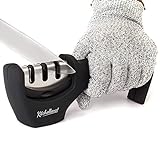



Last update on 2026-03-17 / Affiliate links / Images from Amazon Product Advertising API
See all knife sharpener on Amazon
What You’ll Need (tools/materials)
- Sharpening stone (water stone, oil stone, or diamond stone)
- Water or honing oil (depending on stone type)
- Non-slip base or towel to stabilize the stone
- Clean cloth or paper towel for drying
- Knife to sharpen
- Angle guide (optional, recommended for beginners)
- Flattening stone or lapping plate (for maintaining the stone’s surface)
Step-by-Step Method
- Choose the appropriate stone grit:
- Coarse (200-600 grit) for repairing chips or very dull edges.
- Medium (800-1500 grit) for basic sharpening and edge shaping.
- Fine (3000-8000 grit) for polishing and refining the edge.
- Prepare your stone:
- For water stones, soak in water for 10-15 minutes until bubbles stop.
- Oil stones require a few drops of honing oil; avoid water.
- Diamond stones typically need no lubrication but check manufacturer instructions.
- Secure your sharpening stone: Place it on a non-slip surface like a damp towel or a rubber base to prevent accidents.
- Determine the sharpening angle: Most kitchen knives sharpen well between 15° to 20°. Use an angle guide or practice maintaining a consistent angle.
- Sharpen the blade:
- Hold the knife firmly and push the blade across the stone, moving from heel to tip while maintaining the angle.
- Use smooth, even strokes, applying moderate pressure.
- Sharpen one side of the blade for a set number of strokes, then flip and repeat on the other side.
- Alternate sides to develop a balanced edge.
- Progress through grit stages: If using multiple stones, start with the coarsest grit and finish with the finest to polish the edge.
- Clean and dry your knife and stone: Wipe down the blade carefully to remove any metal particles and dry the stone to avoid damage.
Common Mistakes to Avoid
- Using the wrong grit: Starting with too fine a stone won’t reshape a dull edge; starting too coarse on a sharp knife wastes time and can damage the blade.
- Inconsistent angle: Varying your sharpening angle leads to a weak or uneven edge, reducing cutting performance.
- Neglecting stone preparation: Using a water stone without soaking or oil stone without oil reduces effectiveness and damages the stone.
- Sharpening only one side too much: This causes edge asymmetry and weakens the blade.
- Not flattening the stone: Over time, stones wear unevenly, making sharpening less effective and inconsistent.
Troubleshooting
- Blade not getting sharp: Check if you are maintaining the correct angle and applying enough pressure. Also, ensure the stone is properly prepped and not too worn down.
- Stone surface becomes grooved or uneven: Use a flattening stone or lapping plate regularly to maintain a flat surface.
- Metal filings sticking to the stone: Rinse the stone periodically during sharpening to clear the slurry and maintain efficiency.
- Knife edge chips after sharpening: This can happen if the angle is too narrow or pressure is too high; reduce pressure and increase the angle slightly.
Safety Notes (non-weapon framing)
- Always work on a stable surface to prevent slips.
- Keep your fingers clear of the blade edge while sharpening.
- Sharpen knives away from your body to reduce injury risk.
- Store sharpening stones safely out of reach of children.
- Use protective gloves if you are new to sharpening or handling very sharp knives.
Maintenance and Long-Term Tips
- Clean your sharpening stones after each use to remove metal debris and residue.
- Dry water stones completely before storing to prevent mold and stone degradation.
- Regularly flatten your stones to maintain a consistent sharpening surface.
- Rotate between stones of different grits based on how often you use your knives and their condition.
- Keep your knives clean and dry before sharpening to avoid contamination of the stone.
Final Thoughts
Investing time in selecting the right sharpening stone and mastering its use fundamentally improves your kitchen knife’s longevity and performance. Remember that sharpening is a skill developed through practice, patience, and understanding your tools. For deeper insight into selecting and caring for your knives, reviewing knife types and their specialized uses will enhance your knowledge base and sharpening success—see types of knives and their uses. Coupled with a solid grasp of how blade shape affects sharpening, accessible via why blade shape matters more than brand, you will be equipped to keep your kitchen blades razor-sharp for years to come.
Further Reading on Sagaknives
- Knife collecting basics
- Types of knives and their uses
- How often you should sharpen a Japanese knife
Last Updated on March 17, 2026